Restaurant Fire Suppression Testing & Inspection Westchester Pizzerias
Master Fire Systems provides restaurant fire suppression testing and inspection for Westchester pizzerias, including semiannual system service, fusible-link detection review, nozzle and appliance coverage checks, pull-station testing, shutdown verification, inspection tagging, maintenance recommendations, and hydrostatic-test record review.
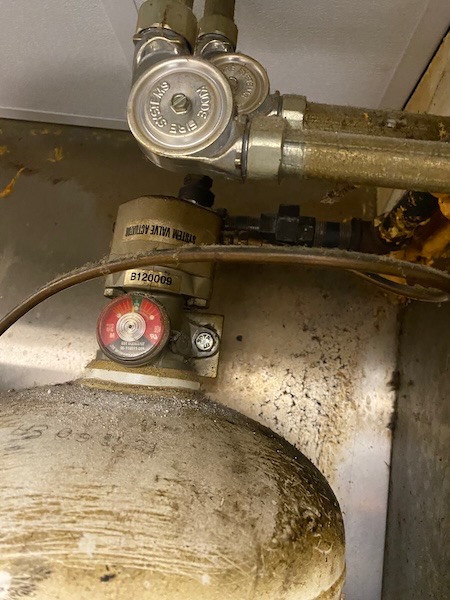
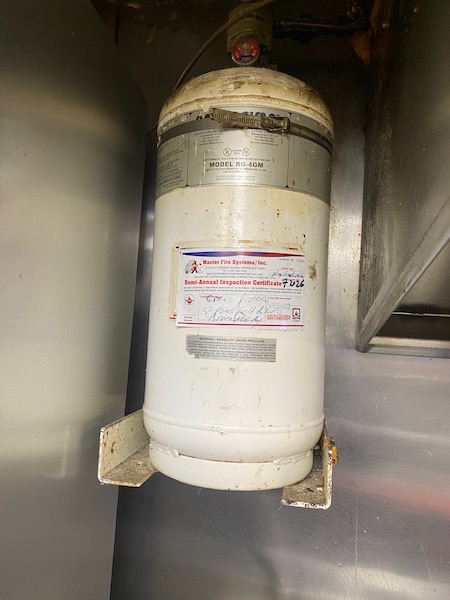
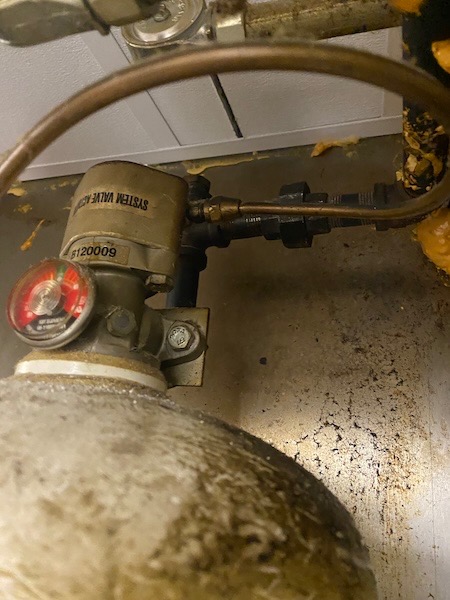
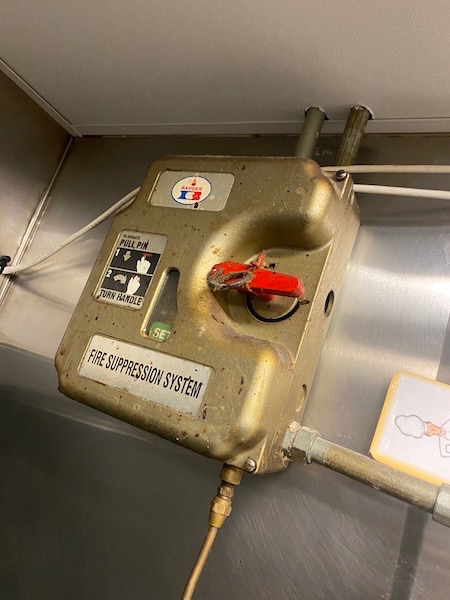
Fire Suppression Testing and Inspection at Gino’s Pizzeria
Westchester Pizzeria Fire Protection Review
Gino’s Pizzeria in Westchester County needed its commercial kitchen fire suppression system professionally tested and inspected. Pizza kitchens can create sustained heat, grease vapor, smoke, and cooking residue. Those conditions make regular fire protection service especially important.
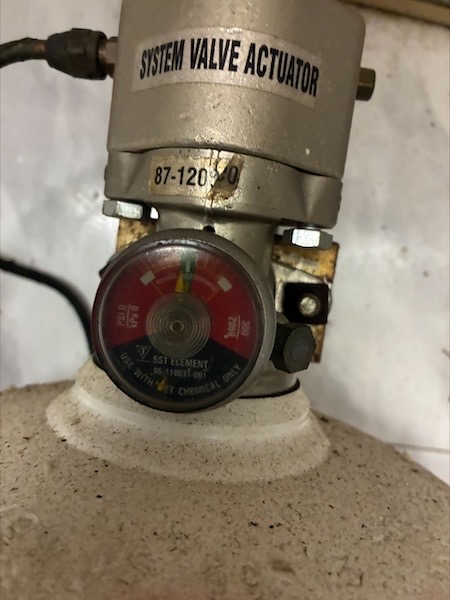
The inspection focused on the automatic wet-chemical suppression system protecting the cooking appliances, hood, plenum, and exhaust duct. Master Fire Systems also reviewed the manual activation equipment, automatic detection components, shutdown controls, service records, and inspection tag.
A pizzeria may use deck ovens, conveyor ovens, fryers, ranges, grills, or other commercial appliances. The exact hazards vary by kitchen. The suppression system must remain matched to the appliances located beneath the hood.
Semiannual Professional Inspection
Commercial cooking fire suppression systems generally require professional maintenance at intervals no longer than six months. The service must follow the system manufacturer’s manual, listing, and the requirements of the local authority having jurisdiction.
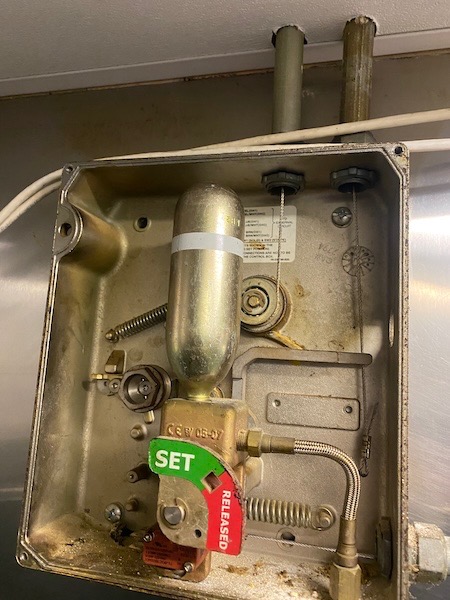
During a semiannual visit, the technician reviews the complete system. This includes the agent cylinder, control head, detection system, piping, nozzles, pull station, shutoffs, seals, labels, and service documentation.
The technician also looks for changes to the cooking line. New or moved appliances can affect nozzle coverage. Even a small change may leave part of the cooking surface without proper protection.
Fusible Links and Automatic Detection
Many mechanical restaurant suppression systems use fusible links for automatic heat detection. The links connect to a tensioned detection cable installed above the cooking equipment.
When a link reaches its rated temperature, it separates. The cable tension is released, which activates the mechanical control head and starts the suppression sequence.
Fusible links must remain correctly rated, properly installed, and free from grease, paint, corrosion, or physical damage. Their replacement schedule should follow the listed system and manufacturer instructions.
The detection cable, conduit, corner pulleys, brackets, and termination points also require attention. Grease or mechanical restriction can interfere with proper movement.
Nozzles and Appliance Coverage
Suppression nozzles direct wet-chemical agent toward specific hazards. Separate nozzles may protect appliances, the hood plenum, and the exhaust duct opening.
Each nozzle should have the proper type, orientation, and listed coverage. Blow-off caps should remain in place to protect the openings from grease and debris.
During the inspection, the technician checks whether the cooking equipment still matches the original layout. Pizza kitchens often change equipment as the menu expands. Added fryers, ranges, or ovens may require system modification.
Manual Pull Station and Shutdown Functions
The manual pull station allows restaurant staff to activate the suppression system during an emergency. It must remain visible, labeled, unobstructed, and accessible.
Activation should also initiate the required shutdown sequence. Depending on the approved design, gas or electrical power to protected cooking equipment may be interrupted.
Microswitches and related controls help perform these functions. They may also activate an alarm or control make-up air and exhaust equipment.
A system is not fully dependable if the agent can discharge but required shutdown functions fail. Mechanical and electrical interfaces must therefore be reviewed during service.
Hydrostatic Test Record from 2021
Gino’s Pizzeria had a documented hydrostatic test from 2021. That record is different from the required semiannual inspection.
A hydrostatic test evaluates the structural integrity of a pressurized cylinder. The cylinder is tested according to its listing, manufacturer requirements, markings, and the applicable fire protection standard.
Many wet-chemical system cylinders use a 12-year hydrostatic interval. If that interval applies to this specific cylinder, a 2021 test could place the next test in 2033.
However, the technician must verify the cylinder label, manufacturer instructions, test stamp, and service documentation. The date should never be assigned from a general rule alone.
Portable Class K Extinguisher Requirements
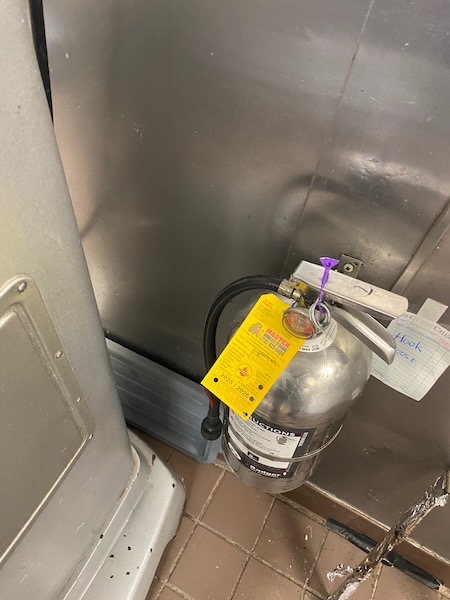
The portable Class K extinguisher follows a different service schedule from the fixed hood suppression cylinder. Class K extinguishers are designed for fires involving commercial cooking oils and fats.
Wet-chemical portable extinguishers commonly use a five-year hydrostatic interval. Therefore, a Class K extinguisher last hydrostatically tested in 2021 may require testing in 2026.
The technician should confirm the extinguisher manufacturer, cylinder marking, service history, and applicable NFPA 10 requirements before determining the exact due date.
Monthly Visual Checks by Pizzeria Management
Professional service does not replace routine owner oversight. A trained manager should visually review the system between technician visits.
The inspection tag should remain current and readable. The pull station must stay accessible. Nozzles and caps should appear intact and unobstructed.
Pressure indicators should remain within the normal operating range when the system design includes gauges. Management should also look for physical damage, grease buildup, moved appliances, or blocked system components.
Any visible problem should be reported to a qualified fire protection company. Restaurant staff should not dismantle, reset, recharge, or modify the suppression system.
Pizza Oven Exhaust and Hood Cleaning
Fire suppression service and hood cleaning are separate operations. Both are essential to pizzeria fire safety.
Grease and cooking residue can collect inside filters, hood plenums, ducts, fans, and rooftop exhaust equipment. Heavy-volume kitchens may require more frequent cleaning than low-volume operations.
Cleaning frequency depends on cooking methods, operating volume, grease production, fuel type, and the local authority’s requirements. Wood-fired or solid-fuel equipment may create additional inspection and cleaning concerns.
A clean exhaust path reduces fuel available to a fire. It also allows the hood and ventilation system to operate more effectively.
Gino’s Pizzeria Inspection Outcome
Master Fire Systems reviewed the suppression system, automatic detection components, pull station, nozzles, appliance coverage, shutdown functions, cylinder condition, and service documentation.
The 2021 hydrostatic-test record was noted for verification against the specific equipment requirements. The inspection also reinforced the difference between semiannual maintenance and long-term cylinder testing.
By keeping its suppression system, portable extinguishers, exhaust equipment, and cleaning records current, Gino’s Pizzeria can reduce fire risk and remain better prepared for Westchester fire-safety inspections.
Restaurant Fire Suppression Testing for Westchester Pizzerias
Why Pizzerias Need Regular Fire System Service
Restaurant fire suppression testing and inspection for Westchester pizzerias helps protect cooking equipment, employees, customers, and property. Pizza kitchens often operate for long hours and produce sustained heat.
Many locations also use fryers, ranges, griddles, cheese melters, conveyor ovens, or other grease-producing equipment. These appliances can increase the kitchen’s fire load.
A properly maintained wet-chemical suppression system detects excessive heat and discharges agent over the protected hazards. It must also complete the required fuel and power shutdown sequence.
Semiannual Professional Maintenance
Commercial cooking suppression systems generally require professional maintenance at intervals no longer than six months. The exact service must follow the system manufacturer, equipment listing, and local AHJ requirements.
The technician checks the cylinder, control head, detection line, fusible links, nozzles, piping, pull station, seals, shutdowns, and inspection records.
Any restaurant renovation or appliance change should trigger an additional system review. Nozzle coverage must continue to match the actual cooking line.
Routine Owner Visual Inspections
Pizzeria management should also perform recurring visual checks between professional service visits. The inspection tag should remain current, and the pull station must stay accessible.
Nozzles should not be blocked or damaged. Grease should not cover detection components, and cooking appliances should remain in their approved locations.
Visible defects require prompt professional attention. Restaurant employees should never attempt to repair or recharge the system themselves.
Hydrostatic Testing Is a Separate Requirement
Hydrostatic testing is not the same as a six-month inspection. The test evaluates the structural integrity of a pressurized cylinder.
Gino’s Pizzeria had a hydrostatic-test record dated 2021. A qualified technician must compare that date with the cylinder marking and manufacturer requirements.
If the equipment uses a verified 12-year interval, the next hydrostatic test may fall in 2033. Portable Class K extinguishers often follow a shorter interval and must be evaluated separately.

Westchester Pizzeria Fire Suppression FAQs
How often should a Westchester pizzeria fire suppression system be inspected?
Commercial cooking fire suppression systems generally require professional maintenance at intervals no longer than six months. The technician must follow the system manufacturer’s manual, equipment listing, and the requirements of the local authority having jurisdiction.
What is checked during a pizzeria suppression inspection?
The technician may inspect the wet-chemical cylinder, control head, piping, nozzles, blow-off caps, detection cable, fusible links, pull station, appliance coverage, shutdown controls, service seals, inspection tag, and system documentation.
Can a restaurant manager perform the six-month inspection?
No. The professional inspection and maintenance should be completed by a qualified fire protection technician. Restaurant management may perform routine visual checks but should not dismantle, recharge, reset, or modify the system.
What should the pizzeria manager check each month?
Management should confirm that the inspection tag is current, the manual pull station is accessible, nozzles are unobstructed, caps are present, appliances remain in position, and no visible damage or grease buildup affects the system.
Do fusible links need replacement during every inspection?
Fusible links must be inspected and serviced according to the system manufacturer’s listed requirements. Replacement may be required based on the maintenance interval, grease contamination, damage, paint, corrosion, improper rating, or other service conditions.
What happens after a suppression-system discharge?
The system must be inspected, cleaned, reset, recharged, and restored by a qualified fire protection company. The cooking equipment, nozzles, cylinder, control head, shutdowns, and affected ventilation areas should be reviewed before operation resumes.
Does moving a pizza oven require another inspection?
It can. Moving, adding, or replacing commercial cooking equipment may affect nozzle aim and listed appliance coverage. The suppression system should be evaluated whenever the protected cooking line changes.
Is the hydrostatic test the same as the six-month inspection?
No. The semiannual inspection checks the system’s operating condition and maintenance needs. Hydrostatic testing evaluates cylinder integrity at a longer interval determined by the equipment, listing, manufacturer, and applicable standard.
When is a cylinder hydrostatically tested after a 2021 test?
If the specific wet-chemical cylinder has a verified 12-year hydrostatic interval, a test completed in 2021 may place the next test in 2033. The technician must confirm the cylinder marking, manufacturer instructions, and service record before assigning that date.
Does a Class K extinguisher follow the same hydrostatic schedule?
No. Portable wet-chemical Class K extinguishers commonly use a five-year hydrostatic interval. A unit tested in 2021 may therefore require testing in 2026, subject to its label, manufacturer instructions, and service history.
How often should a pizzeria hood and duct system be cleaned?
Cleaning frequency depends on the cooking volume, fuel type, grease production, equipment, manufacturer guidance, and local requirements. High-volume or heavy-grease operations may require quarterly or more frequent cleaning.
Does hood cleaning count as suppression-system testing?
No. Hood and duct cleaning removes grease from the exhaust system. Suppression inspection evaluates the fire-extinguishing equipment, detection, nozzles, controls, shutdowns, and service documentation. Both services are necessary.
| Service Interval | Inspection or Test | Pizzeria Compliance Focus |
|---|---|---|
| Recurring Visual Check | Management reviews the tag, pull station, visible nozzles, caps, pressure indicators, appliance position, and obvious grease or physical damage. | Helps identify visible problems between professional service visits. Staff should not dismantle or modify the system. |
| Every Six Months | Qualified technician inspects and maintains the cylinder, control head, fusible links, detection cable, nozzles, piping, pull station, shutdowns, seals, and records. | Confirms that the system remains properly maintained and matched to the protected cooking equipment. |
| After Discharge or Modification | System is inspected, cleaned, reset, recharged, tested, and reviewed after activation or changes to the cooking line. | Cooking should not resume until the fire protection system and connected shutdowns are properly restored. |
| Long-Term Cylinder Interval | Hydrostatic testing evaluates cylinder integrity according to the cylinder marking, manufacturer, listing, and applicable standard. | A 2021 test may lead to a 2033 due date when a verified 12-year interval applies. |
| Hood and Duct Cleaning | Cleaning frequency is based on cooking volume, grease production, fuel type, equipment, and local requirements. | High-volume pizzerias and kitchens using solid-fuel equipment may require more frequent cleaning. |
Fire Suppression Testing for Pizzerias Throughout Westchester
For restaurant fire suppression testing and inspection for Westchester pizzerias, Master Fire Systems provides semiannual maintenance, fusible-link review, nozzle and appliance coverage inspection, pull-station testing, shutdown verification, service tagging, corrective repairs, and hydrostatic-test record review.
We serve pizzerias, restaurants, bakeries, cafés, food halls, commissaries, schools, hotels, hospitals, senior facilities, and commercial kitchens throughout White Plains, Yonkers, New Rochelle, Mount Vernon, Scarsdale, Hartsdale, Greenburgh, Elmsford, Ardsley, Dobbs Ferry, Irvington, Tarrytown, Sleepy Hollow, Peekskill, Port Chester, Rye, Mamaroneck, Larchmont, Westchester County, the Bronx, and the New York metropolitan area.
Do not confuse a current hydrostatic-test date with the required recurring system inspection. Call Master Fire Systems at (917) 261-3710 or visit https://masterfiresystems.com to schedule pizzeria fire suppression inspection and testing.
Resumen en español
Master Fire Systems ofrece inspección y pruebas de sistemas de supresión de incendios para pizzerías en Westchester. El servicio profesional generalmente se realiza en intervalos que no exceden seis meses, de acuerdo con el sistema, las instrucciones del fabricante y los requisitos de la autoridad local.
La inspección puede incluir el cilindro de agente químico húmedo, mecanismo de activación, enlaces fusibles, cable de detección, tuberías, boquillas, tapas protectoras, estación manual, cobertura de los equipos de cocina, apagado de gas o electricidad, etiquetas y documentación.
Gino’s Pizzeria tenía un registro de prueba hidrostática de 2021. Esa fecha debe verificarse con la etiqueta del cilindro y las instrucciones del fabricante. Si el cilindro específico utiliza un intervalo confirmado de 12 años, la próxima prueba podría corresponder en 2033.
Los extintores portátiles Clase K tienen un calendario separado. Un extintor químico húmedo probado en 2021 puede necesitar otra prueba hidrostática en 2026, dependiendo del fabricante, la etiqueta y el historial de servicio.
Para inspección y pruebas de sistemas de supresión en pizzerías de Westchester, llame a Master Fire Systems al (917) 261-3710.
No restaurant owner or property manager wants to gamble with FDNY inspections, fire safety violations, or system failures — and that’s why so many NYC businesses rely on Master Fire Systems, the trusted fire protection and commercial kitchen fire safety specialists serving New York City including from Yonkers, Washington Heights East Tremont and Throgs Neck, to the East Village, Bayside, Richmond Hill, as well as Midtown, Harlem, Bushwick, and Downtown Brooklyn.
We also proudly serve restaurants big and small in Westchester including in:
Greenburgh, NY
We understand how stressful it can be to deal with failed inspections, violation notices, emergency shutdowns, and aging fire protection systems — especially when your business, staff, and customers are on the line. Our team works directly with restaurant owners, building managers, and contractors to correct issues quickly, document compliance properly, and keep systems operating safely.
From our Bronx-based operations, Master Fire Mechanical proudly serves all five NYC boroughs — including Manhattan, Brooklyn, Queens, The Bronx, and Staten Island — providing fire suppression systems, hood & duct protection, exhaust system support, sprinkler coordination, inspections, testing, maintenance, and violations removal.
Whether you’re opening a new restaurant, upgrading an existing commercial kitchen, responding to a failed FDNY inspection, or taking over a previously closed space, Master Fire Systems is here to protect your operation and keep you compliant.
Stay informed and inspection-ready:
Subscribe to our YouTube channel for short, practical fire safety videos, read our blog (updated weekly with real NYC field insights), and follow us on Instagram for behind-the-scenes service work and compliance tips.
— including: Harlem, Spanish Harlem, Lower Manhattan, Upper Manhattan, and Inwood
NYC boroughs: Brooklyn, Queens, Staten Island, The Bronx, and Manhattan.
We serve Restaurants and Commercial Cooking establishments in 10467, 10456, 10468, 10457, 10471, 10458, 10460, 10472, 10459, 10475, 10470, 10469, 10462, 10474, 10466, 10476, 10452, 10461, 10463, 10455, 10464, 10449, 10479, 10480 and 10451
Subscribe to our YOUTUBE CHANNEL and also keep up with our field techs on our RECENT JOBS BLOG.
For more information give us a call at (718) 828-6424!
Master Fire Prevention being a reliable fire protection services company in NYC requires a combination of our expertise, rapid response, regulatory compliance, advanced technology, and exceptional customer service. By excelling in these areas, we effectively safeguard lives and property, earning the trust and loyalty of our clients in the ever-dynamic landscape of New York City.